
Plants for dry summers
Updated: Aug 2

With a rain-free July behind us and the first day of August equally dry in my gardens in East Yorkshire I find it tricky to chose plants to thrive in soil baked by the midsummer sun and either powdery dust or impenetrable clay.
Once I have got a trowel in the soil and a hole fit for planting in I need to select a plant that will enjoy basking in the sun and cope with little rain. Of course it's no surprise that lavenders and buddleyas do well in drought. I'd like to let you know of less-known flowers I've noticed not giving up the ghost in these hot, dry conditions.
Dianthus - carnations, sweet Williams

Much-loved carnations seem to flower happily in beds while they're surrounded by plants thirsty and crinkling up in the summer drought.
One rule of thumb I've learnt in the gardening world is that blue or silver-leaved specimens tend to grow well and flower in sunny, summer conditions. Carnations come into this category.
If I dead-head (snip off) the flowers that have gone over they seem to keep producing new buds, all without me needing to give them water at times. An ideal flower for rockeries, raised beds or at the front of the borders.
Agastache

Agastache gives us tall handsome spikes of blue or pink flowers, depending on the variety, in midsummer. Given a generous dose of sunlight it will flower happily, bringing bees to the garden too. A must choice for wildlife-gardeners wanting to fill a south-facing rockery or flower bed.
I love Agastache as it comes back year after year and has the same vigour as mint (and we know how rampant that can get!) without getting too confident and spreading wildly.
Agastache follows from catmint (Nepeta) extending the flower season and gives midsummer dynamism to your flower beds.
Hylotelephium - sedum, iceplant
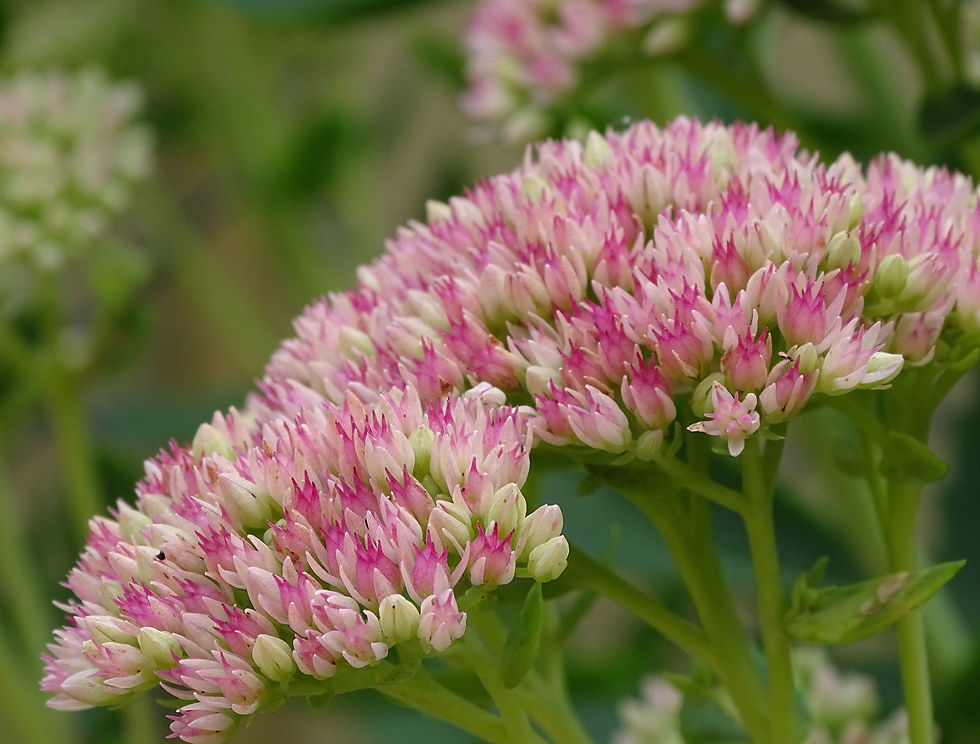
This perennial works so well in the garden to give gardeners frothy pink flowers later in the year. They usually start to come into bloom from September but I suspect with the heat of this year's summer they'll start to flower in earnest from mid-August.
It thrives in sunny conditions and will withstand drought on account of its succulent leaves and their slightly silvery surface. A silvery surface on leaves acts as a kind of sun-block. Not exactly but it's a near-enough analogy.
I adore that sedums can be divided so easily as a great way to increase plant numbers in your garden. Once they've finished flowering in about November I divide them and cut them back to a few inches above the ground. This is enough for them to come back strong next summer and provide flower colour in late summer and autumn.


