
Pick plants for a strong garden design

There are five plant types (six at a push) that I like to consider when planning a garden border or indeed a full planting scheme for a garden-owner. I try to get each plant type in my design and, if possible, interest in spring, summer, autumn and winter. That's what I'll discuss today.
The big five (and my quirky names for them!)
Wow plants - aimed to take your breath away

I recommend every gardener has a wow plant in their outdoor space. So that at some point you or those that come into your garden stop and marvel at the beauty; whether that's from architectural leaves, a host of flowers or impressive leaf colour in autumn.
For instance a magnolia in spring looks stunning with its candelabra blooms, a wisteria in summer stops you in its tracks as does a sweet gum tree in autumn.
I find it pays to balance wow plants carefully. Too many and the general feel of the garden might get confused or overwhelming. Too few and the garden lacks punch. In a small garden (e.g. 5 square metres) I would aim for one wow plant. For a medium garden (10 square metres) I would aim for two wow plants. For a larger garden I would aim for 10-15% of the overall planting.
WINNING ATTRIBUTE - wow plants are effective and create a very strong focal point.
Backbone plants - something to look at for 12 months of the year

These plants provide height, vitality and structure to your garden all year round. Yes whether you're enjoying your garden outside on a balmy July evening or looking at your garden through the window in the depths of winter there's a strong visual element.
These plants are in the main evergreen - whether broad-leaved or conifers. I see conifers in my gardens near the Humber in all shapes and sizes. Tall. conical yews, low-growing yet spreading junipers and box topiary. They all keep their leaf canopy through the winter so look good in both July and January.
Broad-leaf evergreens include laurel hedges, euonymus shrubs, castor-oil plants and low-growing bergenias. All these are hardy too in the UK so do well even in the Yorkshire gardens I work on.
WINNING ATTRIBUTE - backbone plants give your garden some height all year round
Jewellery plants - take backbone plants to a new dimension
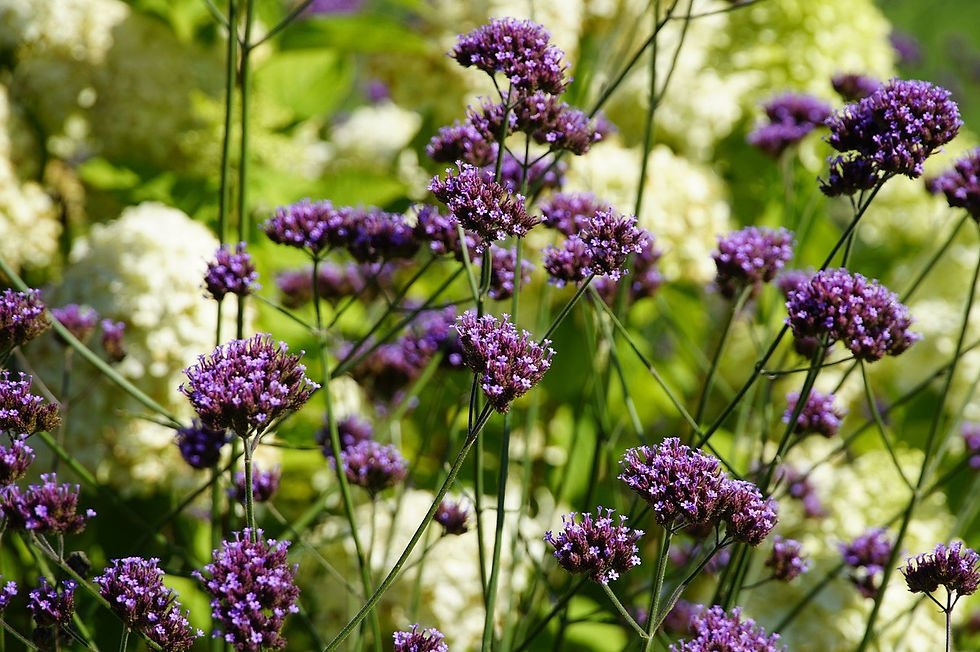
Jewellery plants are the elegant perennials, shrubs and climbers that add colour and charm to the backbone plants. For instance a large clipped box can be decorated (I guess like a Christmas tree) with a climbing clematis flowering in the summer and giving the illusion that the box has produced beautiful blue-purple blooms. We can achieve the same effect using sweet peas or climbing nasturtium.
Jewellery plants don't just have to be climbers though. We can use some species of perennials, planted in front of backbone plants. It will look like the backbone plant has been studded with ear-rings or brooches.
Verbena bonariensis is an excellent example. It's a lovely summer perennial with little (but many!) purple flower clusters on slim, tall stems reaching a metre. The elegant stems become practically invisible giving the illusion that the backbone plant is the one producing all the attractive purple flowers.
WINNING ATTRIBUTE - Jewellery plants add sparkle to functional backbone plants.
Easy-on-the-eye plants

This is where all the different bulb plants, perennials and biennials fill the gaps in the beds between the backbone plants and jewellery plants. I try to aim for having neighbouring plants the same in either flower colour, height or leaf texture to create a feeling of rhythm from one plant to the next.
For instance orange-flowering montbretia goes next to blue irises with the same leaf type, which in turn goes next to a hydrangea with blue flowers.
It's also good generally to have the shorter plants to the front and the taller plants to the back. This rule of thumb can be tested sometimes though for a bit of fun and visual interest.
WINNING ATTRIBUTE - flower colour from the beginning to the end of the season.
Icing-on-the-cake plants

These plants complete the picture once the other plant types have been taken into consideration. There may be gaps in your flower border that could be 'in-filled' with a temporary splash of colour.
Icing-on-the-cake plants include a whole host of annual bedding plants, tall annuals like sunflowers and leafy ferns for textual interest.
It might even be time for you to add a statue in a gap. I use this opportunity to pop in something whimsical to put a smile on my face as I walk past. I'm not averse to a garden gnome if it's comical.
WINNING ATTRIBUTE - icing-on-the-cake plants dot the 'i's and cross the 't's.
And that sixth plant type?

If you're into growing fruit and vegetables then this is the type of plant I'm referring to. Fruit and vegetable plants are not just productive; they can be attractive too and fit well into a border scheme.
Rhubarb, for instance, with its big architectural leaves look great next to another plant with impressive leaves. Leeks have spiky leaves that match the growth habit of grasses, irises and red-hot-pokers.
Apple trees, particularly crab apple trees, will make an excellent wow plant in the spring with its many blossoms and also fantastic autumn colour.
So start having fun with these big plant types. I consider them all now when doing a new design in my East Yorkshire gardens and they certainly don't disappoint for structure, different heights and overall impact.

